
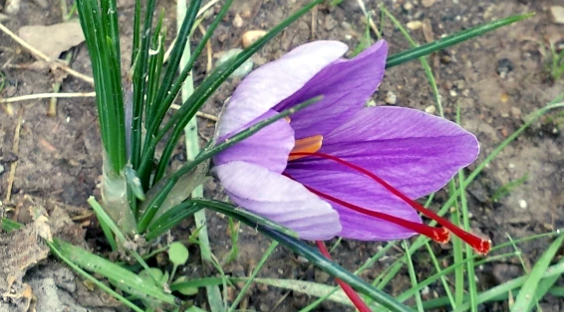
In the soft light of a Texas autumn morning, a field of slender purple flowers opens almost overnight. Each bloom lasts only a day or two. Inside, three delicate crimson threads wait to be plucked by hand before the sun climbs too high. These are the stigmas of Crocus sativus, the source of saffron — the world’s most expensive spice by weight. What was once the exclusive domain of Mediterranean and West Asian landscapes is now finding a foothold in Texas, where the combination of hot, dry summers, well-drained soils, and a growing interest in high-value, low-water crops has opened a quiet but compelling new chapter in the state’s agricultural story.
The Spice and Its Demands
Saffron is not a seed, root, or leaf. It is the carefully dried red stigma of a fall-blooming crocus that produces no viable seed and must be propagated from corms (bulb-like underground stems). Each flower yields only three stigmas. Roughly 150,000 flowers are required to produce a single kilogram of dried saffron. The labor is intense, the window narrow, and the quality highly sensitive to how quickly the stigmas are harvested and dried. That scarcity, combined with the spice’s distinctive aroma, golden color, and complex flavor (earthy, slightly bitter, floral, and honeyed), has long commanded premium prices — often thousands of dollars per pound for high-grade product.
The plant itself is remarkably frugal once established. It requires relatively little water, prefers full sun, and thrives in regions with hot, dry summers that allow a summer dormancy period, followed by cooler temperatures that trigger flowering. Well-drained sandy or loamy soils with a pH roughly between 6 and 8 are ideal; heavy, waterlogged ground quickly leads to corm rot.
>>The domain name, TexasSaffron.com is available Buy Now!
Why Texas Fits
Texas’s vast size creates a range of microclimates, some of which align surprisingly well with saffron’s needs. The arid and semi-arid zones of West Texas, the High Plains, and portions of the South Plains offer the hot, dry summers and good drainage that the crop favors. Elevations and diurnal temperature swings in these regions help provide the cool nights and moderate winter chill that encourage reliable blooming. Many parts of the state fall within USDA hardiness zones where Crocus sativus can succeed with careful site selection, though milder central and southern areas may require attention to winter chill hours and summer heat management.
The crop’s low water demand is especially relevant in a state where irrigation water is increasingly precious. Once the corms are established, saffron’s annual water needs are modest compared with many conventional row crops or even some permanent plantings. It can serve as a diversification option for growers seeking higher returns per acre on smaller parcels, or as a complementary crop in systems already using efficient drip irrigation.
The Growing Cycle in a Texas Context
Planting typically occurs in late summer to early fall — mid-August through early October in most suitable Texas locations — so the corms can establish roots before cooler weather arrives. Corms are set 4 to 6 inches deep and spaced 6 to 8 inches apart in well-prepared, well-drained beds. A balanced fertilizer worked into the soil beforehand supports early growth. Full sun is essential; wind protection helps preserve the fragile flowers.
After planting, the corms spend the winter establishing themselves. In spring they produce foliage that photosynthesizes and builds energy stores for the next season’s flowers. By summer the leaves die back and the plant enters dormancy — a period that suits Texas heat provided the soil does not stay excessively wet. Flowering begins in autumn, usually October into November, often before or just as the new leaves appear. The purple blooms open for a short time each day. Harvest must be done by hand, preferably early in the morning while the flowers are still fresh. The three red stigmas are carefully separated and dried promptly — often within hours — to preserve color, aroma, and chemical quality. The active compounds responsible for saffron’s signature traits (crocin for color, picrocrocin for taste, and safranal for aroma) are sensitive to heat, light, and moisture.
Corms are perennial and can remain productive for several years, gradually multiplying if conditions are favorable. After three to five seasons, or when yields decline, beds may be renewed by lifting, sorting, and replanting healthy corms.
Economic Potential and Practical Realities
Saffron’s value proposition is clear on paper: high market price, relatively low land and water requirements, and the possibility of strong returns per acre once production stabilizes. For small-scale or specialty growers, it offers a path into a premium niche market driven by chefs, specialty food producers, and consumers seeking authentic, domestically grown spice. Because the United States imports the vast majority of its saffron, local production can command attention for freshness and traceability.
Yet the practical barriers are equally real. The harvest is intensely labor-intensive and must be completed in a narrow seasonal window. Initial investment in quality corms can be significant. Yields in the first year or two are often modest as the planting establishes. Climate variability — insufficient winter chill in milder zones, extreme heat, unexpected heavy rains that risk rot, or late freezes — can affect flowering and quality. Disease pressure is generally low when drainage is excellent, but poor site selection quickly leads to problems. Marketing authentic, high-quality saffron also requires education, as the global market has long struggled with adulteration.
These challenges mean saffron is unlikely to become a broad-acre commodity crop in Texas. Instead, it is emerging as a specialty opportunity — best suited to growers who can manage intensive hand labor, who have appropriate soils and climate, and who can connect with buyers willing to pay for quality and origin.
Culinary and Cultural Place
In the kitchen, a few threads of good saffron transform rice dishes, broths, desserts, and sauces with color, aroma, and depth. Texas cooks are already incorporating it into both traditional and inventive preparations — from elevated paella-style dishes to saffron-infused desserts, teas, and even barbecue-adjacent experiments. Beyond the plate, research continues into the spice’s bioactive compounds and potential health applications, adding another layer of interest.
Closing Reflection
Saffron farming in Texas is still a young and selective endeavor. It does not cover vast acreages or dominate any region the way pecans or wine grapes do. Yet it illustrates the same adaptive spirit visible throughout this series: the search for crops that match the state’s diverse soils, climates, and water realities while delivering distinctive value. In the dry plains and well-drained slopes where purple crocuses can open each autumn, a handful of carefully tended stigmas become one of the most concentrated expressions of place and labor in the Texas agricultural landscape.
Like the other products in this series, saffron shows that Texas is not only a place of scale but also of precision — capable of nurturing both the abundant and the extraordinarily rare.
>>The domain name, TexasSaffron.com is available Buy Now!
(End of Part 3. Next in the series: Olive growing and production in Texas.)