
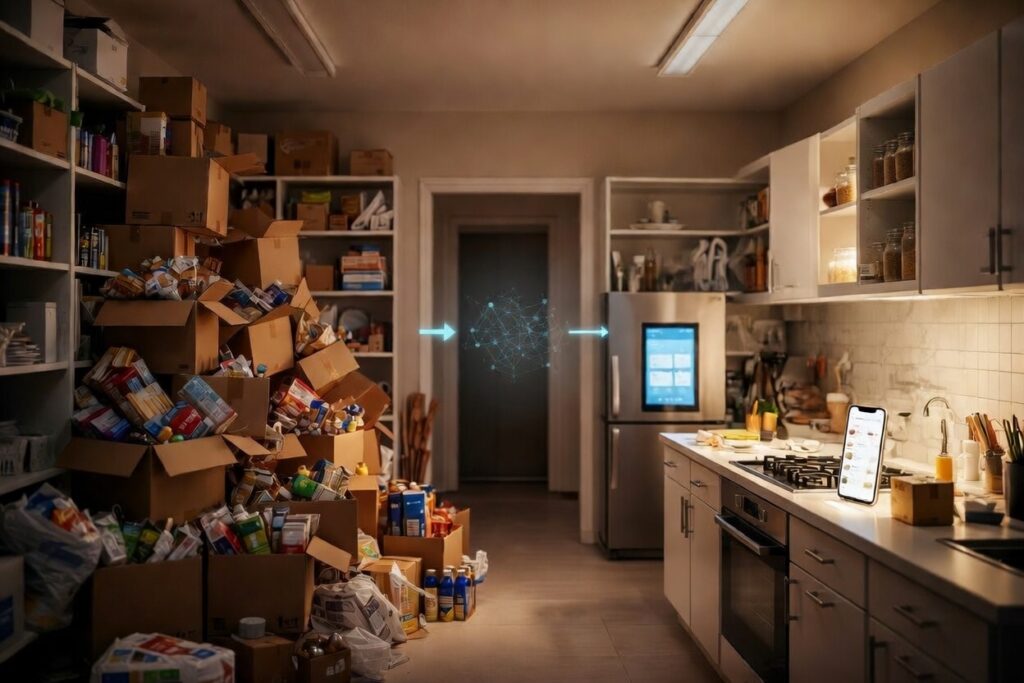
In our always-on, convenience-obsessed world, subscriptions were supposed to be the ultimate hack for modern life. Sign up once, and everything from toilet paper to protein bars magically appears on your doorstep. No more last-minute store runs. No more forgetting the basics. Sounds perfect, right? Until it isn’t.
Most subscription services today operate on a model that feels almost comically outdated: fixed intervals, zero awareness of how you actually use the product, and no ability to adapt to real life. You end up with boxes of stuff you don’t need piling up in the pantry, or you run out at the worst possible moment. Americans waste an average of $200 per year on subscriptions they don’t even use, while the typical adult spends over $1,000 annually on recurring services. That’s real money vanishing into autopilot oblivion.
But there’s a smarter way forward—one that turns the entire concept of “replenishment” on its head. It’s called dynamic, behavior-aware replenishment, and when powered by AI, it transforms a simple grocery list (or any household, office, or personal-care list) into an intelligent, self-correcting system. This isn’t just an incremental tweak. It’s the upgrade that makes today’s rigid subscriptions look as obsolete as flip phones.
Let’s break down why the old model fails so spectacularly—and why the AI-driven future is not only better, but inevitable.
The Three Fatal Flaws of Today’s “Dumb” Subscriptions
First, fixed intervals. Most services ship on a rigid schedule—every two weeks, every month, every quarter—whether you need it or not. Life doesn’t work that way. One month you host a big family barbecue and blow through the ketchup and paper towels. The next month you’re traveling and your pantry stays full. Yet the box still arrives like clockwork.
Second, no awareness of usage. Traditional subscriptions have no clue how much you actually consume. Did you switch to a new brand of coffee that lasts longer? Did your kids suddenly develop a cereal obsession? Did you start meal-prepping and now use twice as much olive oil? The service doesn’t know and doesn’t care. It just keeps sending the same quantity.
Third, no adaptation. Life changes constantly—new dietary restrictions, seasonal shifts, guests, vacations, budget crunches, even the weather. A fixed subscription can’t respond. You’re left manually pausing, canceling, or adjusting orders every time something shifts, which defeats the whole point of “set it and forget it.”
The result? Waste on a massive scale. U.S. households throw away roughly 30–40% of the food supply they purchase, costing the average person about $728 per year in uneaten food alone—or nearly $2,913 for a family of four. Produce alone can cost a family of four around $1,600 annually in wasted items. When subscriptions feed into that cycle by over-delivering non-perishables or pantry staples that sit unused until they expire, the financial and environmental toll adds up fast. Subscription fatigue is real: 74% of consumers say it’s easy to forget about recurring charges, and many end up paying for services they no longer value.
Enter Dynamic, Behavior-Aware Replenishment: The AI Upgrade
Imagine an AI system that manages your grocery list—or any replenishment list—not as a static schedule, but as a living, learning companion. It watches your actual behavior, learns your patterns, factors in real-world variables, and automatically adjusts what arrives, when, and in what quantity. No more guessing. No more waste. Just intelligent, frictionless replenishment.
This isn’t science fiction. Retailers already use AI for predictive replenishment in stores, cutting food waste by an average of 14.8% in pilot programs while boosting sales and reducing labor by up to 20%. Consumer-facing versions are emerging through smart pantry apps, IoT-enabled fridges, and AI grocery planners that scan receipts, track inventory via photos, suggest recipes based on what’s on hand, and auto-generate adaptive shopping lists. The leap is connecting all that data into a seamless, proactive system that places orders for you.
The Tangible Benefits That Make This a Game-Changer
1. Massive Cost Savings
By ordering only what you actually need—and only when you need it—you eliminate overbuying and emergency trips. AI can spot that your family’s milk consumption dropped because the kids are now in soccer season and drinking more sports drinks. It adjusts quantities downward automatically. Studies on AI demand forecasting show retailers can shrink excess inventory by up to 30% while reducing stockouts. For households, that translates directly into hundreds of dollars saved annually on groceries and household goods.
2. Drastic Waste Reduction
Expired yogurt, stale cereal, forgotten cleaning supplies—these disappear when replenishment matches real usage. AI can factor in expiration dates, consumption rates, and even external signals like weather (more grilling supplies in summer) or holidays. The same AI tech that helped grocers divert thousands of tons of surplus food can now prevent it at the consumer level, shrinking the residential sector’s contribution to the 70 million tons of annual U.S. food surplus.
3. Unparalleled Convenience and Time Savings
No more Sunday night list-making. No more frantic “what do we need?” texts while you’re already at the store. The AI maintains a dynamic master list, flags low-stock items, suggests substitutions based on your preferences, and even integrates with delivery services for one-tap approval (or full autopilot if you choose). For busy families, ranch households managing bulk feed and supplies, or remote workers juggling office pantry restocks, this is life-changing.
4. True Personalization and Adaptability
AI learns your unique rhythms. Vegetarian shift in the household? It scales back meat and ramps up produce. New baby? More diapers and baby food appear exactly when usage spikes. Seasonal allergies? More tissues and allergy meds without you lifting a finger. Unlike rigid subscriptions, it adapts in real time to behavior, life events, and even predictive factors like upcoming travel (pulled from your calendar with permission).
5. Environmental and Sustainability Wins
Less over-ordering means fewer delivery trucks, less packaging waste, and dramatically lower landfill contributions. When scaled across millions of households, the impact compounds. AI-driven systems already prove they can cut spoilage and shrink while increasing in-stock rates and customer satisfaction.
6. Healthier Habits and Smarter Choices
Advanced versions could integrate with nutrition apps or wearable data. Running low on protein but your fitness tracker shows increased workouts? The AI might suggest adding more nuts or Greek yogurt to the next order. It becomes a subtle coach for better eating without the judgment.
7. Scalability to all types of lists
While grocery lists are the obvious starting point, the same AI engine works for any replenishable category. Pet food that adjusts to your dog’s growth phase. Office supplies that learn your printing habits. Ranch or farm essentials—fence posts, tractor oil, animal supplements—that respond to herd size, weather forecasts, and seasonal workloads. Personal care, cleaning products, even hobby supplies like gardening seeds or art materials. One intelligent brain managing every recurring need in your life.
How It Actually Works (Without the Sci-Fi Jargon)
At its core, the system combines several data streams:
- Historical usage from past purchases, receipt scans, or smart-home inventory tracking.
- Behavioral signals—app inputs, voice commands (“Hey AI, we’re out of coffee”), or integrated smart scales and pantry cameras.
- External context—weather, calendar events, local sales, or even supply-chain disruptions.
- Machine learning models that continuously refine predictions, much like the predictive analytics already transforming grocery retail.
You start simple: link your loyalty cards or scan a few pantry shelves. The AI builds a baseline, then improves every week. Privacy controls let you decide what data it sees. Opt-in “auto-order” mode handles everything; otherwise, it sends a smart notification with a one-tap “approve and ship” button.
Real-World Scenarios: From City Apartments to Texas Ranches
Picture a busy New Braunfels family: kids in sports, parents working hybrid. The AI notices cereal flying off the shelf faster during school weeks but slower in summer. It quietly adjusts without anyone noticing—until the parents realize they haven’t run out of milk in months.
Or a ranch household: bulk dog food, horse supplements, and household staples. Weather data predicts a wet spring (more mud, more laundry detergent). Herd size changes mean different feed volumes. The AI adapts the replenishment list accordingly, saving weekend trips into town and preventing expensive last-minute runs.
Are you developing a product to solve this? Acquire the domain name ListGPT.ai on the Atom marketplace today!
Challenges and the Road Ahead
Of course, no technology is perfect. Privacy concerns, data accuracy during the learning phase, and the need for user trust are real. Early adoption might require some manual tweaks. Yet the same AI systems already proving themselves in commercial grocery settings show these hurdles are surmountable—and the payoff is enormous.
We’re on the cusp of a consumer AI revolution. Just as predictive replenishment is slashing waste and boosting profits for retailers, the household version will do the same for families. The rigid, one-size-fits-all subscription era is ending. In its place rises something truly intelligent: replenishment that knows you, adapts to you, and works for you.
The next time you open yet another box of stuff you didn’t really need this month, ask yourself: Why settle for dumb when dynamic is possible? The AI-powered grocery list—or other recurring or one time shopping list—isn’t just convenient. It’s smarter living, one adaptive delivery at a time.