

In the ever-evolving landscape of finance and technology, prediction markets are poised for an unprecedented surge over the next three to five years. What began as niche platforms for wagering on election outcomes has transformed into a multi-billion-dollar industry, with platforms like Polymarket leading the charge. By the end of 2025, monthly trading volumes in prediction markets had skyrocketed from under $100 million in early 2024 to over $13 billion, representing a staggering 130-fold increase. This explosive growth is not just hype—it’s the dawn of a new era where collective intelligence shapes financial decisions, and the demand for strategic digital assets, particularly domain names, will skyrocket alongside it.
Prediction markets operate on a simple yet powerful premise: users bet on the outcomes of real-world events, from political elections to sports results, cryptocurrency prices, and even climate milestones. The aggregated bets create probabilistic forecasts that often outperform traditional polls or expert opinions. Polymarket, a blockchain-based platform, captured global attention during the 2024 U.S. presidential election, where traders wagered over $3.6 billion on outcomes. But this is merely the tip of the iceberg. As we enter 2026, industry projections suggest the sector could reach $95.5 billion by 2035, with annual growth rates nearing 47%. Combined volumes from dominant players like Polymarket and Kalshi exceeded $44 billion in 2025 alone, signaling a shift from experimental betting to mainstream financial infrastructure.
A Brief History and the Current Momentum
The concept of prediction markets isn’t new. Roots trace back to the 19th century with informal betting on elections, but modern iterations emerged in the late 20th century through academic experiments like the Iowa Electronic Markets. These early platforms demonstrated the “wisdom of crowds”—the idea that diverse groups can predict outcomes more accurately than individuals. Fast-forward to the 21st century, and blockchain technology has supercharged this model by enabling trustless, decentralized transactions.
Polymarket’s rise exemplifies this momentum. Launched in 2020, it faced regulatory hurdles, including a 2022 CFTC settlement that restricted U.S. access. However, by 2025, strategic acquisitions like the $112 million purchase of QCEX—a CFTC-licensed exchange—paved the way for a U.S. relaunch. Funding poured in, with Intercontinental Exchange (parent of the NYSE) committing $2 billion, valuing Polymarket at $8 billion. Kalshi, another key player, secured $1 billion in funding and expanded into sports, crypto, and economics contracts after a landmark 2024 legal victory against the CFTC.
This growth isn’t isolated. In 2025, prediction markets became a “Big Bang” phenomenon, with billions in venture capital flowing into the space. Sports betting emerged as a dominant category, accounting for a significant portion of volumes on both platforms, while politics and crypto markets drew institutional interest. Traders aren’t just hobbyists; professional “sharps” now make millions by exploiting inefficiencies, turning prediction markets into full-time careers.
Why Prediction Markets Are Set to Explode Now
Several converging factors are fueling this imminent boom:
- Global Uncertainty as a Catalyst: In an era marked by geopolitical tensions, rapid AI advancements, economic volatility, and climate crises, prediction markets offer a real-time barometer for risk assessment. For instance, during the 2024 election cycle, Polymarket’s odds on Donald Trump’s victory proved more accurate than traditional polls, drawing attention from investors and policymakers alike. As uncertainties mount—think AI regulatory battles or macroeconomic shifts—these platforms provide probabilistic signals that traditional forecasting can’t match.
- The Superiority of Crowd Wisdom: Studies have long shown that aggregated market predictions often surpass expert analyses. In 2025, non-sports markets like economics and tech saw volumes surge, with economics growing 905% to $112 million. This crowd-sourced intelligence is why big money—from hedge funds to corporations—is turning to prediction markets for hedging and insights.
- Blockchain’s Enabling Power: Decentralized ledgers ensure transparency, immutability, and global accessibility without intermediaries. Platforms like Polymarket use stablecoins for seamless betting, reducing friction and enabling borderless participation. This tech stack has driven user growth from 4,000 monthly active users in early 2024 to over 612,000 by late 2025.
- Evolving Regulations: Historically a barrier, regulations are now opening doors. In early 2026, the CFTC withdrew a proposed ban on political and sports contracts, signaling a shift toward supportive frameworks. Chairman Michael Selig emphasized crafting “clear standards” to foster innovation, positioning the CFTC as the primary regulator. This regulatory thaw is expected to attract more institutional players and expand market categories.
- Institutional Appetite for Probabilities: Big money thrives on data-driven decisions. Prediction markets provide quantifiable signals, with open interest in politics dwarfing sports on Polymarket (400% higher in 2025). Fintech giants like Robinhood and FanDuel have partnered with platforms like Kalshi, integrating event contracts into mainstream apps.
These elements combine to position prediction markets as the financial layer for future decision-making. Beyond betting, they’re evolving into tools for corporate strategy, policy forecasting, and even scientific research.
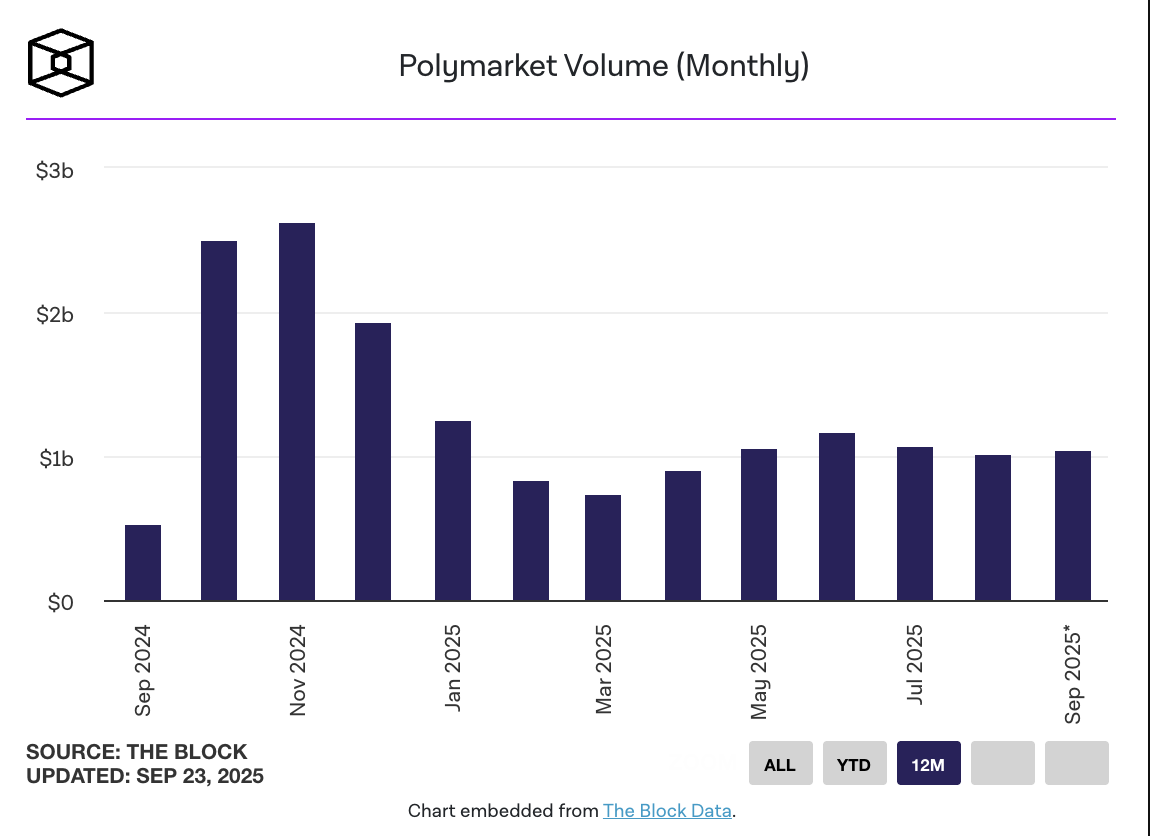
How Prediction Markets Are Maturing Into Financial Data Infrastructure
| Year | Monthly Volume (USD) | Key Drivers |
|---|---|---|
| Early 2024 | < $100M | Initial hype around elections |
| End 2025 | > $13B | Sports, politics, crypto expansion |
| Projected 2030 | $10B annual revenues | Institutional adoption |
| Projected 2035 | $95.5B market size | Global integration |
The Pivotal Role of Domain Names in This Ecosystem
As prediction markets mature, domain names will become indispensable digital real estate. Here’s why:
- Building Trust and Credibility: In an industry handling billions in wagers, trust is paramount. A premium domain signals legitimacy, much like in traditional betting or fintech. For example, in crypto, domains like .eth or .crypto enhance security by linking to wallets, reducing phishing risks. Prediction platforms will need domains that evoke reliability to attract users wary of scams.
- Capturing Organic Traffic Through Keywords: SEO-optimized domains drive visibility. Terms like “predict,” “forecast,” or “odds” can funnel search traffic. In betting, .bet domains have surged in popularity for their relevance, improving search rankings and brand recall. As users search for “crypto prediction markets,” keyword-rich domains will dominate results.
- Reducing Customer Acquisition Costs (CAC): Strong brands lower marketing expenses. A memorable domain cuts through noise, fostering loyalty. In fintech, domains have been key to scaling, with Amazon securing crypto-related names preemptively. Prediction startups will follow suit to minimize CAC in a competitive field.
- Strategic Use for Redirects, Funnels, and Defense: Companies often secure multiple domains for marketing funnels, redirects, and protecting against cybersquatting. In blockchain, decentralized domains (e.g., as NFTs) offer permanent ownership, shielding against censorship. With prediction markets’ global reach, defensive registrations will prevent brand dilution.
- Monetization and Industry Savvy: This sector has capital—Polymarket alone raised billions—and understands digital assets. Domains are viewed as investments, similar to crypto tokens. As in trading and betting, early movers secure premium names, anticipating value appreciation.
The pattern mirrors crypto and betting industries. In crypto, domains simplified transactions and built empires; in betting, .bet extensions differentiated brands. Prediction markets, blending both, will demand even more: category-definers like PredictionHub.com or OnChainForecast.com.
Lessons from Analogous Sectors and Future Outlook
Betting, trading, and crypto all saw domain rushes during booms. Sportsbooks snapped up .bet domains for credibility; crypto firms adopted .io or .eth for tech appeal. Prediction markets will amplify this, given their hybrid nature. By 2030, as volumes approach $1 trillion, domains will be critical for new entrants like Railbird Exchange or Novig.
Looking ahead, prediction markets could integrate with AI for enhanced forecasts or expand into niche areas like healthcare outcomes or space exploration. Domains will anchor these innovations, serving as gateways to decentralized apps and wallets.
In conclusion, the prediction markets explosion is inevitable, driven by technology, uncertainty, and regulatory tailwinds. For savvy investors, the real opportunity lies in domain names—scarce assets that will underpin this growth. Secure them early, as serious players always do. The next gold rush isn’t in bets; it’s in the digital addresses that make them possible.
The following domain names are available for immediate acquisition and fast transfer via Afternic. Once they are gone, they are gone.
👉PredicitonSignals.com
(Note spelling, 2 letters are transposed, this name will capture all type-ins to this common misspelling)
👉OddsForecasts.com
Article citations:
- https://www.example.com/kalshi-funding-2025
- https://www.bloomberg.com/news/articles/2025-polymarket-nyse-ice-2b
- https://dune.com/polymarket/kalshi-combined-volume-2025
- https://www.marketsandmarkets.com/Market-Reports/prediction-markets-forecast-2035.html
- https://polymarket.com/election-2024-volume
- https://www.coindesk.com/business/2025-prediction-markets-trillion-projection
- https://www.theblock.co/post/polymarket-sharps-2025
- https://www.reuters.com/technology/polymarket-qcex-acquisition-2025
- https://polymarket.com/open-interest-politics-vs-sports-2025
- https://www.cftc.gov/PressRoom/PressReleases/polymarket-settlement-2022
- https://www.kalshi.com/legal-victory-2024
- https://techcrunch.com/2025/polymarket-us-relaunch
- https://dune.com/queries/polymarket-user-growth-2024-2025
- https://www.cftc.gov/polymarket-restriction-2022
- https://www.cftc.gov/PressRoom/2026-political-sports-contracts
- https://www.fintechfutures.com/2025/robinhood-kalshi-partnership
- https://www.cftc.gov/news/selig-clear-standards-2026
- https://www.predictit.org/history-wisdom-crowds
- https://en.wikipedia.org/wiki/Iowa_Electronic_Markets
- https://www.blockworks.co/news/prediction-markets-big-bang-2025
- https://www.coindesk.com/markets/2025/polymarket-valuation-8b
- https://www.theinformation.com/articles/prediction-markets-venture-capital-2025
- https://www.forbes.com/sites/digital-assets/2025/prediction-markets-sports-boom
- https://www.domainnamewire.com/2025/bet-domains-surge
- https://www.ens.domains/blog/crypto-domain-security-2025
- https://www.namecheap.com/blog/fintech-domain-strategy
- https://www.godaddy.com/resources/skills/premium-domains-betting
- https://www.icann.org/resources/pages/bet-gTLD-2024
- https://www.unstoppable Domains.com/blockchain-domains-2025
- https://www.cointelegraph.com/news/decentralized-domains-nft-ownership
- https://www.searchengineland.com/keyword-domains-seo-2025
- https://www.amazon.jobs/crypto-domain-acquisitions
- https://www.semrush.com/blog/betting-domain-seo-2025