
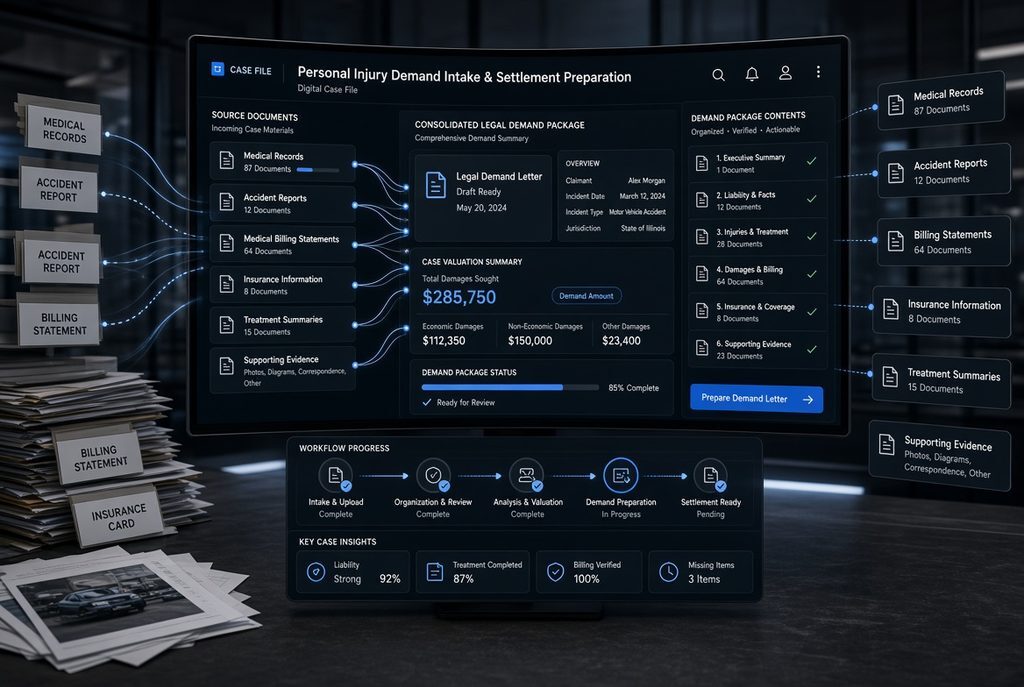
In the rapidly evolving landscape of Legal Operations (LegalOps), the consumer-facing sector has successfully commoditized the onboarding process. Personal injury, family law, and criminal defense firms rely heavily on highly responsive legal CRMs to capture, screen, and schedule prospective clients. However, when we shift the lens to business-to-business (B2B) ecosystems—specifically in-house corporate legal departments, insurance defense firms, and commercial litigation boutiques—a glaring operational bottleneck remains largely unaddressed: the chaos of unstructured demand streams.
While consumer intake focuses on vetting an individual person, B2B intake is centered around routing and processing high-stakes corporate “demands.” Whether it is an internal request from a sales department to review a vendor contract, a third-party subpoena, or an incoming multi-million dollar pre-litigation demand letter from opposing counsel, these workflows are frequently managed through manual, fragmented systems.
The Core Vectors of Unstructured Demand
The inefficiency of current B2B legal intake generally stems from three primary friction points:
1. In-House Corporate Legal Triage
Internal business units (Sales, HR, Procurement) continually generate operational demands that require legal oversight. Without a dedicated gateway, these requests flood into the legal department via ad-hoc emails, Slack channels, or generic enterprise ticketing systems (such as Jira or ServiceNow) that lack legal-specific metadata fields. Attorneys waste critical billable hours manually categorizing requests, assessing risk profiles, and chasing internal stakeholders down for missing contract variables or corporate entities.
2. Document Data Extraction in High-Volume Litigation
In insurance defense and commercial litigation, the receipt of a formal demand letter triggers a strict statutory or contractual countdown. These documents arrive as dense, unformatted PDFs. Parajudicial staff or junior associates are forced to manually read dozens of pages simply to extract core data points: the settlement dollar figure, the strict response deadline, the named parties, and the alleged theory of liability. Because this process is human-dependent, firms face heightened exposure to missed deadlines and transcription errors.
3. Asynchronous Pre-Drafting Context Gathering
For plaintiff-side commercial litigation firms, the gap occurs prior to formal filing. Before a legal team can draft a compelling, ironclad demand letter to a corporate adversary, they must aggregate a massive volume of evidence from their own corporate client. Manually requesting business formation documents, transaction ledgers, and breach-of-contract timelines via email threads creates a fractured, prolonged onboarding cycle.
The Opportunity for Plug-and-Play “Demand Intake” Architecture
To bridge these operational gaps, the next generation of LegalTech must move away from heavy, monolithic case management installations and toward agile, plug-and-play middleware. An optimized B2B demand intake solution requires a specialized architecture focused on three distinct technical capabilities:
- Conditional Logic Business Gateways: Standardized, legal-native front-ends where non-lawyers submit requests. The system dynamically adjusts form fields based on the demand type (e.g., changing prompts automatically if the user selects “IP Infringement” versus “Vendor NDA”) and flags immediate conflict-of-interest indicators.
- AI-Driven Document Parsing: Machine learning and specialized OCR layers designed to ingest incoming demand PDFs, instantly isolate critical metadata (Claim Amount, Expiration Date, Jurisdiction), and convert raw text into structured data.
- API Data Piping: Rather than trying to serve as the ultimate system of record, a plug-and-play tool should function as a smart utility corridor—seamlessly pushing the newly structured demand data directly into existing enterprise applications like Clio, Filevine, iManage, or corporate ERPs.
By automating the ingestion and initial triage of corporate demands, legal organizations can drastically reduce time-to-resolution, eliminate administrative data-entry bottlenecks, and ensure that high-value attorneys spend their time analyzing legal risk rather than sorting through unorganized digital mailrooms.
If you are an enterprise LegalTech provider, insurance carrier, or B2B law firm looking to build, brand, or launch a dedicated solution to solve this exact bottleneck, the premium domain name DemandIntake.com is currently available for acquisition to anchor your product. For inquiries regarding the domain asset, visit DemandIntake.com