
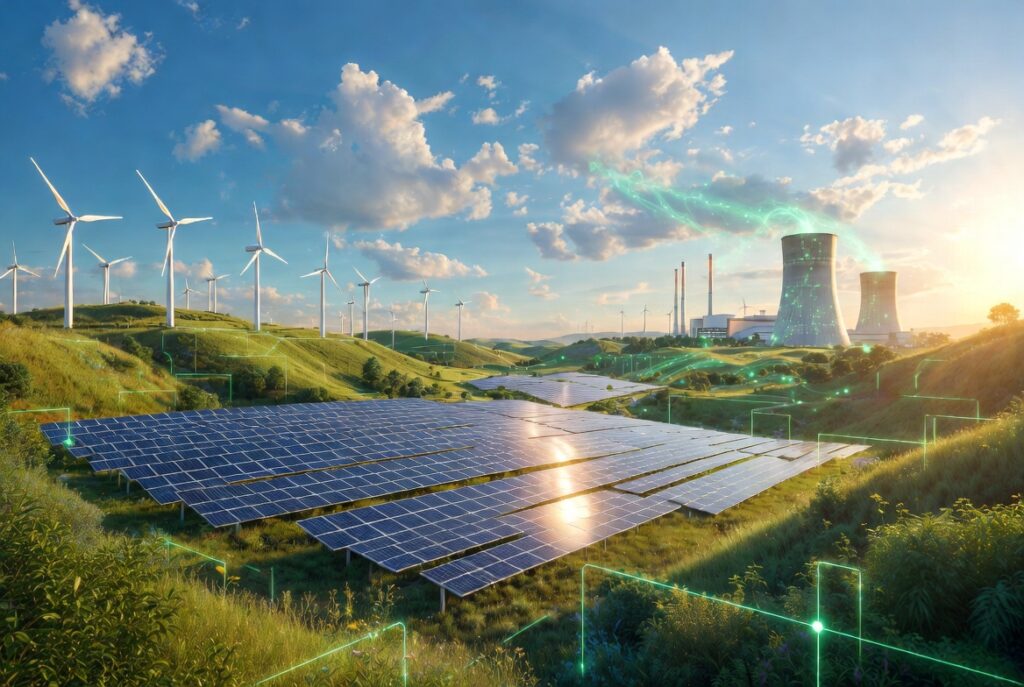
AI is transforming the power grid into a smarter, more resilient, and efficient system by optimizing energy demand, forecasting renewable output, and automating infrastructure management, mixing and orchestrated power sources. It enables real-time grid orchestration, reducing bottlenecks and accelerating the integration of new data center capacities. However, the surge in AI infrastructure is simultaneously placing unprecedented strain on existing energy systems. [1, 2, 3, 4]
Key AI Applications in the Power Grid:
• Predictive Maintenance: Using machine learning to detect potential outages and anomalies before they occur, enhancing grid reliability.
• Grid Optimization: AI optimizes the load balance between supply and demand, particularly crucial for balancing renewable energy variability.
• Capacity Planning: AI tools help utilities plan for growth, identifying which substations and transmission corridors are most likely to face bottlenecks.
• Virtual Power Plants (VPPs): AI coordinates distributed energy resources (like battery storage and solar) to act as a single power plant (power mix). [1, 2, 3, 4, 5, 6]
Opportunities and Challenges:
• Acceleration of Power Delivery: AI speeds up interconnection requests, reducing the time to bring new energy projects online.
• Data Center Demand: The massive energy demands of AI data centers have spurred a “shadow grid” movement, where tech firms build their own dedicated power sources.
• Efficiency Gains: AI-driven analytics help utilities manage increasing demand without building significant new generation, easing the load on aging infrastructure. [1, 2, 7, 8] AI Power Grid (AIPG) Initiative:A specific project known as AI Power Grid (AIPG) is a decentralized physical infrastructure network (DePIN) aiming to democratize open-source and local generative AI by incentivizing a global network of worker nodes to host AI workloads. [9, 10] Impact on Grid Stability:While AI offers optimization, it can also threaten grid stability if massive data centers abruptly go offline, causing potential frequency issues. However, when managed properly, AI increases efficiency, allowing utilities to manage peak demand more effectively. [1, 8] AI responses may include mistakes.
Are you looking for a domain name to perfectly describe a next-generation, AI-enabled power mix? Acquire PowerMix.ai
[1] https://www.weforum.org/stories/2026/03/ai-needs-a-smarter-energy-grid/[2] https://www.powermag.com/how-artificial-intelligence-can-accelerate-power-delivery-to-the-u-s-grid/[3] https://theconversation.com/ais-growing-appetite-for-power-is-putting-pennsylvanias-aging-electricity-grid-to-the-test-274002[4] https://www.technologyreview.com/2023/11/22/1083792/ai-power-grid-improvement/[5] https://news.mit.edu/2026/3-questions-how-ai-could-optimize-power-grid-0109[6] https://www.rand.org/pubs/articles/2025/ai-and-the-future-of-the-us-electric-grid.html[7] https://singularityhub.com/2026/04/02/the-mad-scramble-to-power-ai-is-rewiring-the-us-grid/[8] https://www.youtube.com/watch?v=3__HO-akNC8[9] https://aipowergrid.io/[10] https://www.coingecko.com/en/coins/ai-power-grid