
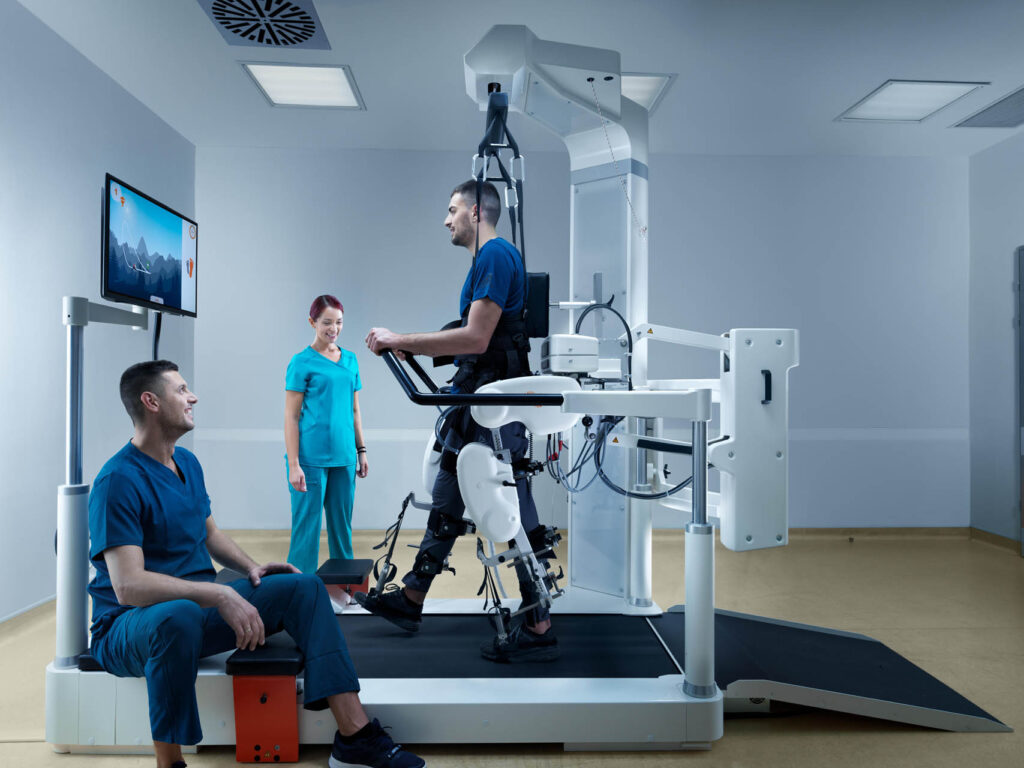
Robotic Assisted Gait Training (RAGT) is a cutting-edge rehabilitation technique that uses robotic devices to help patients relearn or improve their walking ability. Designed primarily for individuals with neurological conditions or mobility impairments, RAGT delivers high-intensity, repetitive, and precisely controlled gait training that would be difficult to achieve through traditional manual therapy alone.
By supporting body weight, guiding limb movements, and providing real-time feedback, these systems enable patients to practice thousands of steps in a single session—far more than conventional methods typically allow. This repetition is key to neuroplasticity, the brain’s ability to reorganize and form new neural connections after injury.
Buy RAGT.ai at the ATOM marketplace.
Who Benefits Most from Robotic Assisted Gait Training?
RAGT is widely used across a range of patient populations, including:
- Stroke survivors
- Individuals with spinal cord injuries (SCI)
- People living with multiple sclerosis (MS)
- Parkinson’s disease patients
- Those recovering from traumatic brain injury (TBI)
- Children and adults with cerebral palsy or other developmental motor disorders
- Post-orthopedic surgery patients needing gait retraining
Clinical studies consistently show improvements in walking speed, endurance, balance, and overall independence when RAGT is integrated into a comprehensive rehab program.
How Robotic Assisted Gait Training Works
There are two main categories of RAGT systems:
- Treadmill-based / End-effector systems – These suspend the patient in a harness over a treadmill while robotic arms or footplates guide the legs through a natural gait cycle.
- Overground / Wearable exoskeleton systems – These powered robotic suits allow patients to walk on the ground, often with adjustable assistance levels that adapt to the user’s effort.
Both types use sensors, actuators, and software to monitor performance, adjust support in real time, and provide therapists with detailed data on progress.
Leading Companies Advancing Robotic Assisted Gait Training
The RAGT field is driven by several innovative manufacturers that have developed FDA-cleared or CE-marked systems now used in hospitals, rehab centers, and research institutions worldwide.
Hocoma / DIH Medical Group remains a pioneer with its flagship Lokomat system—the most established robotic gait trainer globally. DIH also offers complementary solutions such as the Andago, Erigo, and C-Mill for progressive overground and balance training.
Ekso Bionics has made significant strides with the EksoNR (the first exoskeleton cleared by the FDA for stroke, SCI, TBI, and MS) and the Indego line of modular exoskeletons designed for both clinical therapy and personal use.
ReWalk Robotics (Lifeward) is best known for its ReWalk personal exoskeleton, which enables individuals with SCI to stand and walk independently, along with the ReStore soft exo-suit for post-stroke gait assistance.
Tyromotion offers the Lexo, a robotic gait trainer focused on early-stage rehabilitation with engaging, gamified therapy elements.
Ottobock provides advanced orthotic and exoskeleton solutions, including the FreeWalk system, emphasizing long-term mobility support.
Cyberdyne developed the groundbreaking HAL (Hybrid Assistive Limb) exoskeleton, which reads bioelectric signals from the patient’s skin to assist movement in real time.
Other notable players include:
- Reha Technology with the G-EO system
- Motek Medical (part of DIH) and its GRAIL and CAREN platforms for immersive, 3D gait analysis and training
- Biodex Medical Systems
- AlterG (anti-gravity treadmills often used alongside RAGT)
- THERA-Trainer
- Rex Bionics
- Fourier Intelligence
- P&S Mechanics
- and several emerging Asian manufacturers expanding access in global markets
These companies continue to invest in AI-driven software, virtual reality integration, and lighter, more user-friendly designs to make RAGT more accessible and effective.
Proven Benefits and Growing Evidence
Meta-analyses and randomized controlled trials have demonstrated that RAGT can:
- Increase walking speed and distance
- Improve balance and reduce fall risk
- Decrease the physical burden on therapists
- Provide objective, quantifiable progress tracking
- Boost patient motivation through real-time feedback and gamification
When combined with conventional therapy, RAGT often leads to faster functional gains and better long-term outcomes.
The Future of Robotic Assisted Gait Training
As technology advances, we’re seeing smaller, more affordable systems, home-use exoskeletons, and greater personalization through machine learning. Integration with brain-computer interfaces and expanded insurance coverage are also expanding access for patients worldwide.
Robotic Assisted Gait Training has moved from experimental labs to standard-of-care in many leading rehabilitation centers. For clinicians, patients, and caregivers focused on restoring mobility after neurological injury or disease, RAGT represents one of the most promising tools available today.
If you work in neurorehabilitation or are exploring advanced gait therapy options, the systems from the companies mentioned above offer proven, clinically validated pathways to better walking recovery.