
The Rise of Graphene Twistons: Engineering the Future of Quantum Materials
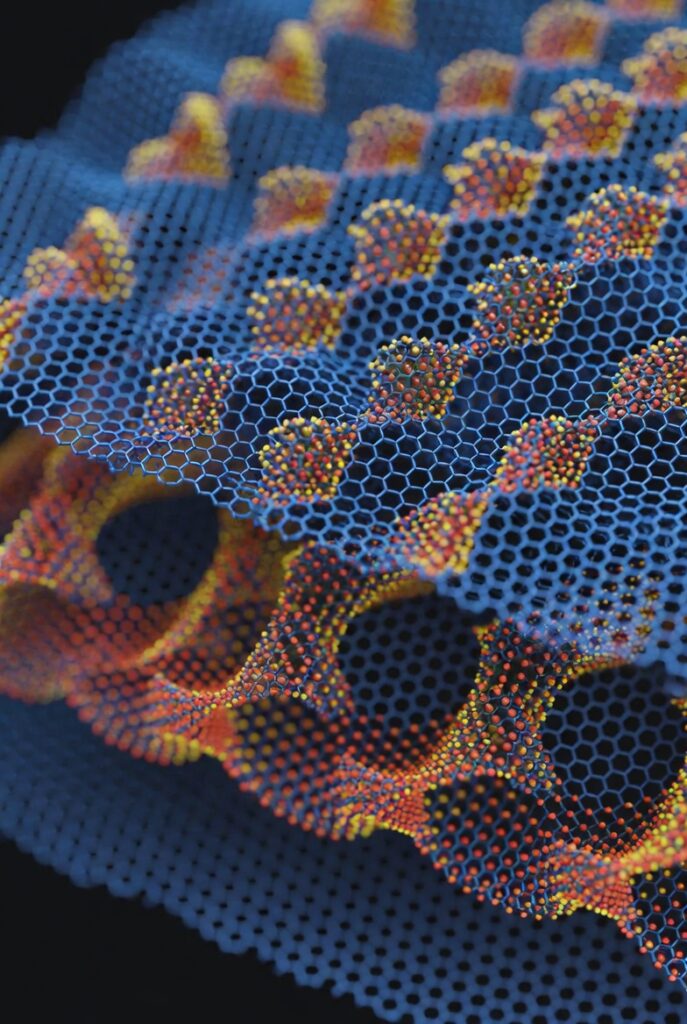
Graphene, the one-atom-thick sheet of carbon atoms arranged in a honeycomb lattice, has long been hailed as a wonder material with extraordinary strength, conductivity, and flexibility. But in recent years, a revolutionary twist—literally—has unlocked even more astonishing properties. By stacking two or more layers of graphene and rotating one relative to the other by a precise angle, scientists have entered the era of twistronics, where the electronic behavior of the material can be dramatically tuned from insulating to superconducting simply by adjusting the twist angle.
At the heart of this field is the discovery of “magic angles,” most famously around 1.1 degrees for bilayer graphene. At these angles, the overlapping atomic lattices create a moiré pattern—a larger-scale interference pattern—that flattens the material’s electronic energy bands. Electrons slow down dramatically, their interactions dominate, and exotic quantum phenomena emerge, including superconductivity at surprisingly accessible temperatures. This breakthrough, first demonstrated in 2018, sparked a global race to harness twisted graphene for next-generation electronics, quantum computing, and energy technologies.
Yet real-world devices are never perfect. Variations in twist angle across a sample, strains from fabrication, and subtle mismatches between layers often disrupt the delicate magic-angle conditions. In bilayer graphene, these imperfections can destroy the flat bands and quench superconductivity. Enter twistons—a newly identified class of topological structures that are turning out to be the unsung heroes stabilizing these quantum states.
Twistons first gained prominence in studies of magic-angle twisted trilayer graphene (TTG), a three-layer system where the middle layer is twisted relative to the outer two. In 2022, researchers at Columbia University’s Pasupathy Lab used scanning tunneling microscopy (STM) to peer at the atomic scale of TTG devices. What they observed was remarkable: instead of a uniform twist, the material undergoes structural relaxation. The moiré lattice “reconstructs” itself, forming large domains locked near the magic angle. To accommodate the overall angle mismatch between the top and bottom layers, localized faults appear—regions where groups of atoms scrunch together into vortex-like patterns dubbed twistons.
These twistons act like natural pressure valves. They absorb the strain and disorder, allowing the bulk of the material to maintain the precise conditions needed for flat bands and strong electron correlations. As a result, TTG exhibits more robust superconductivity than its bilayer counterpart, with a wider “superconducting dome” in the phase diagram. The twistons are gate-tunable, meaning scientists can electrically control them, offering a new knob to fine-tune quantum behavior. Far from being random defects, they create an “orderly disorder” that helps electrons flow coherently through the device.
Twistons.com is for sale at the Atom Trusted Domain Marketplace.
The term “twiston” also appears in earlier theoretical and computational work on twisted graphene nanoribbons. In these narrow strips of graphene twisted along their long axis and placed on a substrate, van der Waals forces localize the twist into moving topological solitons—solitary waves of rotation called twistons. These can propagate with minimal energy loss, colliding and interacting in predictable ways based on their topological charge. While distinct from the moiré defects in multilayer stacks, they highlight how twisting graphene consistently produces rich, soliton-like phenomena governed by topology and geometry.
Why do twistons matter? They bridge the gap between idealized theory and messy experimental reality. In twistronics, perfect alignment has been notoriously difficult to achieve at scale. Twistons suggest that nature itself provides mechanisms to self-correct and stabilize magic-angle physics. By understanding and eventually controlling these structures, researchers can design more reliable superconducting devices, explore unconventional pairing mechanisms in superconductivity, and even engineer new topological states for quantum information processing.
The implications extend far beyond graphene. Twistronics is expanding to other two-dimensional materials—transition metal dichalcogenides, hexagonal boron nitride, and beyond—creating a vast playground for designer quantum matter. Twistons could become a universal tool for taming disorder in these systems, accelerating the development of ultra-efficient electronics, lossless power transmission, and room-temperature superconductors.
As laboratories worldwide race to map, manipulate, and master twistons, one thing is clear: the humble twist of an atomic sheet is rewriting the rules of materials science. What began as a curiosity in bilayer graphene has evolved into a sophisticated toolkit, with twistons emerging as the key to unlocking its full potential.
Twistons.com is for sale at the Atom Trusted Domain Marketplace.