
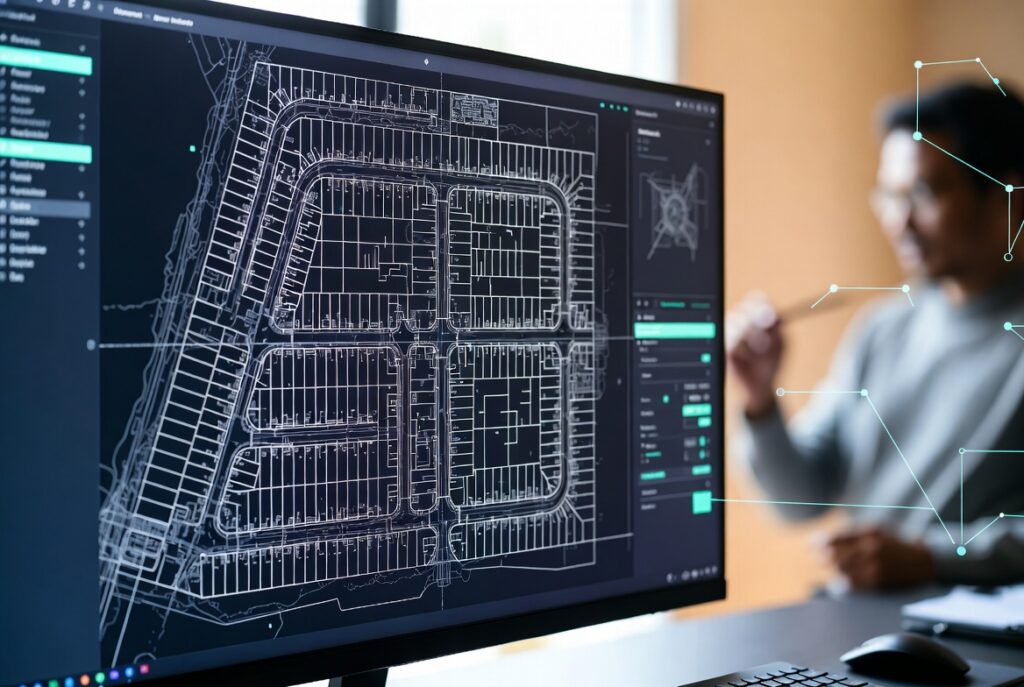
AI-powered plat mapping transforms one of the most traditional and labor-intensive parts of land records, surveying, and real estate.
A plat map (or plat) is the official detailed drawing that shows how land is subdivided into lots, blocks, streets, easements, and boundaries. Creating or updating them has historically been slow, expensive, and prone to human error.
Here are the key benefits of bringing AI into this process:
1. Massive Time Savings
Traditional plat work (researching deeds, interpreting legal descriptions, drawing boundaries, checking overlaps) can take days or weeks. AI can:
- Generate or update plats in minutes to a few hours
- Automatically convert text legal descriptions (metes and bounds) into accurate maps
- Extract features from aerial imagery, drone photos, and LiDAR
Real-world examples show tasks that once took 2 days reduced to ~2 minutes, and environmental review letters going from hours of research to ~20 minutes.
2. Significantly Higher Accuracy
AI excels at:
- Detecting boundary inconsistencies, gaps, or overlaps
- Cross-checking against existing GIS layers and recorded documents
- Identifying errors in old scanned paper plats during digitization
This reduces costly mistakes that can delay closings, trigger disputes, or require expensive re-surveys.
3. Major Cost Reduction
By automating repetitive and time-consuming work, AI-powered plat mapping lowers:
- Labor hours for surveyors and GIS technicians
- Re-work and correction cycles
- Overall project costs for developers and title companies
It also makes high-quality mapping more accessible to smaller firms that previously couldn’t afford large manual teams.
4. Better Scalability
AI handles volume extremely well. A platform can process:
- Entire subdivisions at once
- County-wide updates
- High volumes of transaction-related plats
This is especially valuable during real estate booms, infrastructure projects, or when governments are modernizing legacy land records.
5. Richer Data & New Capabilities
Beyond just drawing lines, AI-powered systems can:
- Automatically pull in and overlay relevant data (zoning, flood zones, utilities, environmental constraints)
- Suggest optimal lot configurations or flag potential issues early
- Create interactive digital plats and even 3D models / digital twins
- Maintain version history and audit trails automatically
6. Improved Data Integration & Freshness
AI helps keep plats synchronized with:
- Property records
- GIS databases
- New survey data
This reduces the common problem of outdated or siloed land information.
7. Accessibility for Non-Experts
Emerging “Autonomous GIS” approaches (using large language models) let people describe what they need in plain language and get maps generated automatically. This democratizes access for real estate professionals, attorneys, planners, and developers who aren’t GIS specialists.
Who Benefits Most?
| Stakeholder | Primary Benefit |
|---|---|
| Land Surveyors | Faster drafting + more time on high-value work |
| Title Companies | Quicker, more reliable parcel research |
| Real Estate Developers | Faster feasibility studies and submissions |
| County Assessors / GIS Depts | Efficient updates to official records |
| Attorneys & Lenders | Clearer boundary data for due diligence |
| PropTech Platforms | Better underlying data for downstream tools |
Building, or already have, an AI Plat Map GIS Platform? Acquire PlatMaps.ai, a premium, descriptive, exact-match asset for GIS