
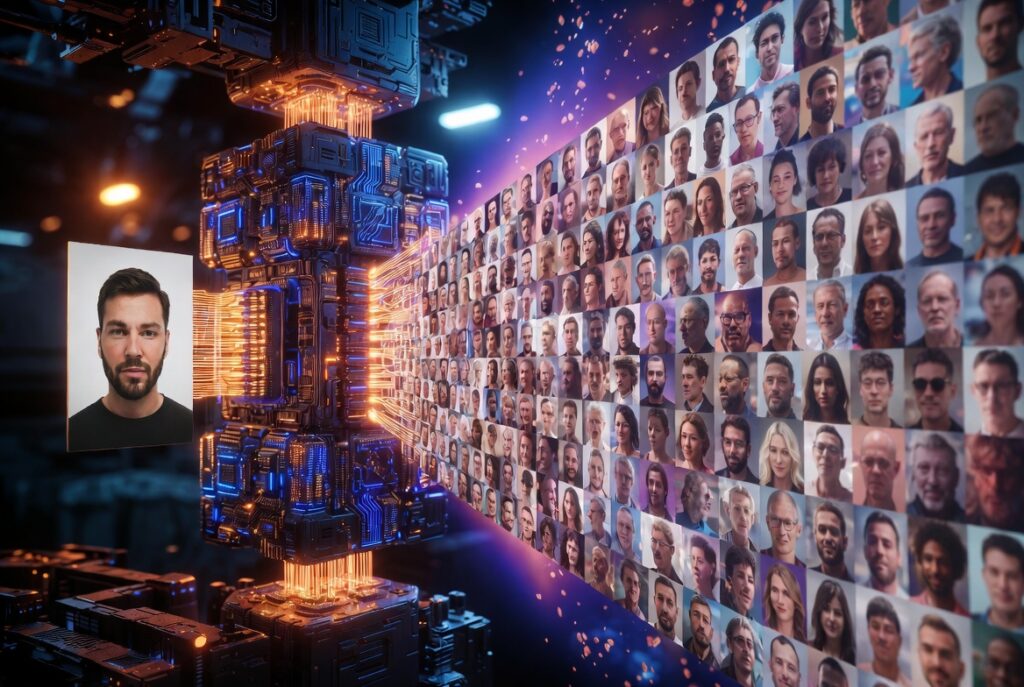
Meta’s release of its advanced AI image generator, Muse Image, has sparked intense backlash over an aggressive “opted-in-by-default” policy that allows users to generate AI images using photos from public Instagram accounts.
Developed by Meta Superintelligence Labs, the tool allows anyone to incorporate another user’s likeness into an AI creation simply by tagging their public profile in a prompt.
The primary controversy stems from severe privacy, security, and consent issues across Meta’s platforms.
Why the Release Sparked Public Backlash
No Consent Required: If an Instagram account is set to public, all uploaded photos are considered fair game for AI image generation by default.
Zero Notifications: Meta’s current policy states that users are not proactively notified when someone else uses their personal photos or likeness to generate an AI image.
Deepfake and Harassment Risks: Cybersecurity experts and privacy advocates warn that giving billions of users the ability to remix real faces easily increases the risk of deepfakes, online harassment, identity theft, and fake brand endorsements.
Shift in Public Profile Meaning: Up until this update, a “public profile” meant visibility; critics point out that Meta has effectively turned public personal galleries into free, uncompensated source material for AI-generated assets.
How to Protect Your Photos and Opt Out
If you want to prevent your photos from being used or remixed by Meta’s Muse Image generator, you have two primary options to lock down your privacy settings:
Switch to a Private Account: Accounts configured as private are automatically exempt from the profile-tagging AI generation feature.
Turn Off AI Reuse in Settings: If you wish to keep your account public, navigate to your Instagram settings, locate the “AI reuse or remix” controls, and toggle the feature off manually to opt out.
Meta has integrated invisible watermarks on all images generated via Muse Image and implemented baseline guardrails to filter out policy-violating content. However, privacy advocates continue to pressure the company, arguing that the system should strictly operate on an explicit opt-in standard rather than forcing users to dig through settings to protect their own faces.
Cybersecurity researchers and legal analysts agree that watermarking is largely “compliance theater” designed to appease governments rather than a tool built to genuinely protect everyday users. [1, 2, 3]
Tech giants like Meta are under massive global pressure to implement AI guardrails. Forcing watermarks into the system allows them to check a very specific regulatory box while continuing to roll out highly invasive features. [1, 4, 5]
The Regulatory Rules Meta is Pleasing
* The EU AI Act Mandate: Strict transparency laws require public-facing generative AI models to include machine-readable watermarks and clear AI-generated labels. Failing to do so carries crippling global revenue penalties. [1, 6]
* California’s Transparency Acts: Prescriptive state laws (like SB 942) explicitly force companies to embed imperceptible, machine-detectable watermarks and provenance metadata into any AI content accessible by their residents. [7]
* The “Good Faith” Shield: By implementing frameworks like [C2PA (Coalition for Content Provenance and Authenticity)](https://c2pa.ai/vs-watermarking) and open-sourcing toolkits like Meta Seal, Meta can point to their tech in court or parliament and argue, “Look, we provided the safety features; we can’t control if users bypass them.” [8, 9]
The Double Standard
The irony is glaring: Meta forces you to dig deep into your settings to opt out of having your literal face scraped by strangers, but they make the watermark automatic to protect themselves from government fines. They are using an easily broken technical patch to shield their multibillion-dollar AI rollout from regulatory shutdown. [1, 10, 11]
Because regulators are focusing heavily on the back-end labeling of files rather than forcing tech companies to get explicit user consent before launching these features, the burden of privacy remains entirely on you. [1, 10]
The Troubling history of Mark Zuckerberg, or, “who didn’t see this coming”?
Going back to Mark Zuckerberg’s time at Harvard University in 2003 reveals the exact foundational events that critics point to when arguing that Meta’s data practices are part of a long-standing pattern.
Long before Facebook, Zuckerberg created projects that centered on unauthorized data scraping, rating people without consent, and a casual disregard for user privacy.
The Facemash Incident (2003)
The most notorious example from his college years is Facemash, a website Zuckerberg built in his dorm room during his sophomore year.
- Unauthorized Scraping: He hacked into Harvard’s student housing “facebook” directories to secretly download the ID photos of undergraduate students.
- Rating System: The site paired photos of students side-by-side and asked users to vote on who was “hotter,” ranking them in an algorithmic leaderboard.
- The Backlash: The site went viral across campus but was shut down by Harvard administrators within days. Zuckerberg faced disciplinary charges for breaching security, violating copyrights, and invading individual privacy, and he ultimately issued a public apology to student groups.
Leaked Instant Messages
Years after Facebook became a global giant, internal instant messages from Zuckerberg’s Harvard days were leaked and published by tech journalists. The most infamous exchange involved him bragging to a friend about having access to thousands of Harvard students’ private information:
Zuck: Yeah so if you ever need info about anyone at Harvard
Zuck: Just ask.
Zuck: I have over 4,000 emails, pictures, addresses, SNS
Friend: What? How’d you manage that one?
Zuck: People just submitted it.
Zuck: I don’t know why.
Zuck: They “trust me”
Zuck: Dumb fucks.
The Winklevoss and Narendra Dispute
Zuckerberg was also hired by fellow Harvard students Cameron and Tyler Winklevoss, along with Divya Narendra, to build a social network called HarvardConnection (later ConnectU). Instead of finishing their project, he delayed his work while using the core concept to build and launch the original Facebook (thefacebook.com) in February 2004. This resulted in a massive breach-of-contract lawsuit that Meta eventually settled for $65 million.
For privacy advocates, these college-era incidents are not just youthful mistakes; they are viewed as the initial blueprint for the “move fast and break things” philosophy that still dictates how Meta deploys its technology today.
[1] [https://www.linkedin.com](https://www.linkedin.com/pulse/watermark-disappears-why-ai-transparency-laws-social-media-milone-uqzjc)
[2] [https://spectrum.ieee.org](https://spectrum.ieee.org/meta-ai-watermarks)
[3] [https://www.locklizard.com](https://www.locklizard.com/document-security-blog/digital-watermark-watermarking/)
[4] [https://www.bbc.com](https://www.bbc.com/news/articles/cp9lee19y1yo)
[5] [https://siliconangle.com](https://siliconangle.com/2026/01/01/reuters-investigation-claims-meta-tried-deceive-regulators-fake-ads/)
[6] [https://www.emergentmind.com](https://www.emergentmind.com/topics/ai-watermarking-and-provenance-standards)
[7] [https://www.softwareseni.com](https://www.softwareseni.com/eu-ai-act-and-content-provenance-regulations-making-c2pa-urgent-in-2026/)
[8] [https://sesamedisk.com](https://sesamedisk.com/meta-ai-watermarking-threat-model-2024/)
[9] [https://magiclight.ai](https://magiclight.ai/news/c2pa-and-global-watermarking-mandates-for-ai-video-in-2026/)
[10] [https://mashable.com](https://mashable.com/tech/meta-muse-image-ai-generator-public-posts-photos-instagram-accounts)
[11] [https://www.instagram.com](https://www.instagram.com/p/DaifWRRkwyc/)