
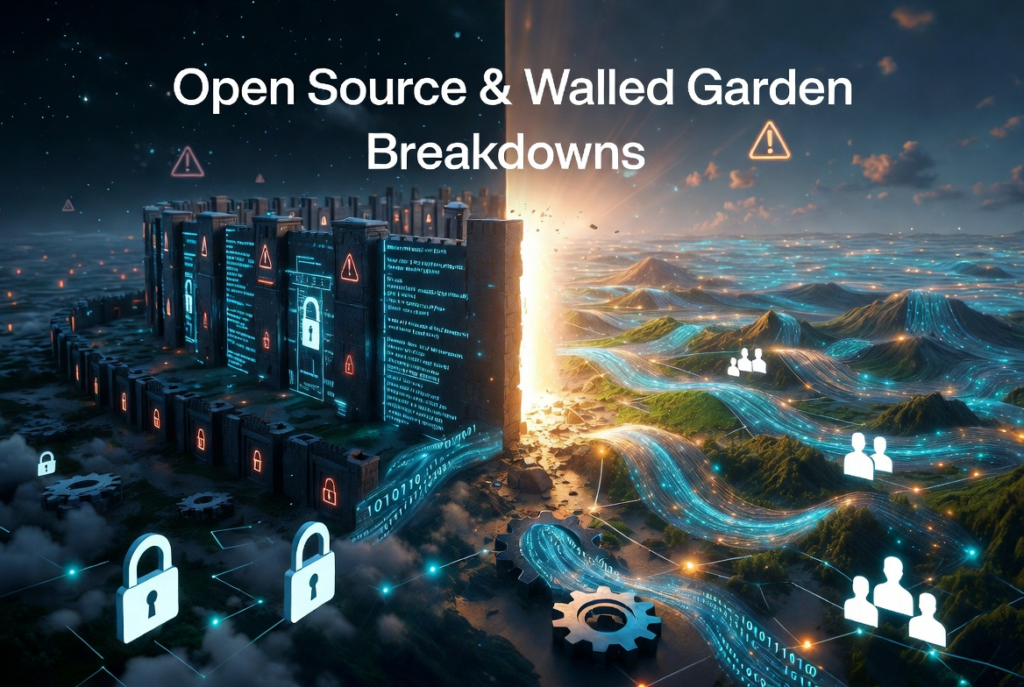
The tech industry is undergoing a profound transformation. Businesses are increasingly rejecting proprietary “walled garden” platforms—closed ecosystems controlled by a single vendor—in favor of portable, open-source tech stacks. This shift is driven by escalating licensing costs, vendor lock-in risks, and a growing demand for transparent data governance and true infrastructure ownership.
Understanding Walled Gardens and Vendor Lock-In
Walled gardens refer to closed platforms where a vendor controls hardware, software, data, and applications, creating seamless internal experiences but significant barriers to exit. Examples include major cloud providers, e-commerce platforms like Shopify or Wix, website builders like Squarespace or GoDaddy, and enterprise software suites. Once invested in customizations, data structures, and workflows, switching becomes prohibitively expensive due to data migration challenges, retraining, and lost functionality.
Vendor lock-in limits agility, inflates long-term costs, and reduces control over critical business assets. Surveys show that a majority of organizations adopt open source specifically to mitigate these risks, with 62% citing it as a key strategy for avoiding lock-in.
The Open-Source Advantage: Portability, Cost Savings, and Control
Open-source software counters these issues through community-driven development, open standards, and full transparency. Key benefits include:
- Reduced Vendor Lock-In and Greater Flexibility: Open-source tools like Kubernetes, Docker, Linux distributions, WordPress/WooCommerce, and databases such as PostgreSQL or MySQL allow businesses to mix and match components. Data formats are documented, and code can be forked or self-hosted, enabling migrations without proprietary dependencies.
- Lower Total Cost of Ownership (TCO): Organizations report significant savings—no licensing fees, predictable infrastructure costs, and the ability to avoid vendor markups. One analysis highlights potential annual savings of tens to hundreds of thousands for startups by using self-hosted open-source stacks.
- Improved Data Ownership and Governance: With self-hosted or open-source solutions, businesses maintain full control over their data, enhancing privacy, compliance, and customization. This is critical in an era of stringent regulations and rising concerns over third-party data practices.
- Innovation and Agility: Open ecosystems foster faster iteration, interoperability, and access to a global talent pool. Companies can customize deeply without waiting for vendor roadmaps.
Real-world examples abound. Brands like Allbirds have leveraged WordPress and WooCommerce for advanced customization and brand storytelling that proprietary builders might constrain. Many businesses migrate from Shopify or Wix to self-hosted WordPress for greater control, using tools and services designed for zero-loss SEO and content portability.
How Businesses Can Own Their Infrastructure
The path to independence involves strategic steps:
- Audit and Plan Migrations: Assess current dependencies and prioritize high-impact areas like e-commerce or content management. Tools for CSV exports, redirects, and data mapping ease transitions.
- Adopt Modular Open-Source Stacks: Start with proven foundations—e.g., WordPress + WooCommerce for sites/stores, Kubernetes for orchestration, or open analytics stacks. Combine with reliable hosting partners that emphasize data liberation.
- Focus on Standards and Portability: Emphasize open APIs, containerization, and documented data schemas to future-proof operations.
- Invest in Expertise: While open source reduces vendor reliance, it may require internal skills or managed support for security, updates, and scaling.
This approach delivers not just cost savings but sovereignty—businesses control upgrades, integrations, and their digital destiny.
The Future Is Open and Owned
The breakdown of walled gardens marks a return to foundational internet principles: openness, interoperability, and user control. Businesses embracing this shift gain resilience, cost efficiency, and innovation velocity. By utilizing portable, open-source technologies companies build durable, independent digital brands positioned for sustained success in a competitive landscape.
The era of dependency is ending. The future belongs to those who own their infrastructure.